
A Step-By-Step Guide to Flex Rigid PCB Manufacturer
Guide to Flex Rigid PCB Manufacturer
The most common type of Printed Circuit Board (PCB) is the rigid one. However, there is also another type called flex PCB. This kind of board is more expensive than the rigid one but it has more features and functionality. In this article, we will look at the steps involved in fabricating a flex rigid pcb manufacturer. We will also discuss where this type of PCB can be used, why it is more costly than the rigid one, and how to order a flex PCB from a manufacturer such as PCBway.
The flex rigid pcb manufacturing process starts with the same steps as the fabrication of a standard rigid PCB, but the substrate material is different. The flex PCB is made from a flexible dielectric film such as polyester (Mylar), polyimide, or fluoropolymer. These materials are typically coated with an adhesive and then laminated onto a rigid base material such as fiberglass or epoxy. The flex layers are then plated with copper, and the conductive paths are etched and routed. A coverlay layer is then added, which acts as a solder mask and protects the traces from oxidation. Finally, the flex PCB is cut to shape and cured by exposure to UV light.
Rigid-flex PCBs are typically used in applications where space is limited or in dynamic environments. This is why they are used in avionics systems, missiles, satellites, and unmanned aerial vehicles (UAVs). They also offer a compact solution for integrating electronics in highly constrained spaces. Rigid-flex PCBs are characterized by their ability to withstand the vibration and shock associated with these types of applications.
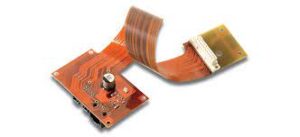
A Step-By-Step Guide to Flex Rigid PCB Manufacturer
To ensure that the flex is durable and can withstand bending, a stiffener is added to the flex circuit. The stiffener is usually made from a copper alloy that can withstand the stresses imposed on the circuit board during reflow soldering. It is also important that the stiffener be bonded to the flex to prevent delamination.
Adding a stiffener to the flex circuit also helps to prevent cracking and warping during thermal cycling. This is because the stiffener adds a structural element to the flex, which reduces the likelihood of it deforming or breaking during thermal cycles.
In addition to the stiffener, the flex circuit should also be anchored to the rigid base using solder lugs or plated-through holes. This will help to prevent the flex from moving or falling off during assembly and use. In some cases, it may be necessary to add a heat sink or a cooling system to the flex circuit to keep it cool and protect it from oxidation.
When selecting a flex rigid pcb manufacturing firm, choose one that has extensive experience in the field. It should be able to provide you with quick turnaround times. Moreover, the firm should be able to deliver high-quality products at competitive rates. Some firms offer rigid flex PCBs for as little as $25 per piece, so it is worth comparing prices to find the best deal.