
How do ceramic PCB boards affect signal transmission?
ceramic PCB boards affect signal transmission
Ceramic PCBs are becoming increasingly popular for use in high-density electronic circuitry. They offer many advantages over traditional FR4 PCB substrates, including durability, stability, and insulation. They also support circuit miniaturization without sacrificing precision and reliability.
The key to maximizing the performance of a ceramic pcb board is effective design. This includes careful selection of manufacturing techniques that are compatible with the material, and proper handling to prevent damage during fabrication. Thorough testing and validation are also essential to ensure that the final product meets performance specifications and quality standards.
Ceramic circuit boards have excellent thermal conductivity, which allows them to draw heat away from sensitive components and keep them cool. This improves the performance of high-speed electronics and minimizes interference and signal loss. This makes them ideal for applications that require high-frequency performance, such as wireless communication devices like smartphones and Wi-Fi routers.
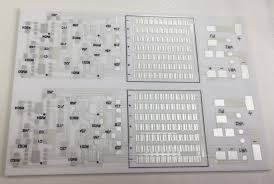
How do ceramic PCB boards affect signal transmission?
Compared to other PCB substrate materials, ceramics have a higher electrical resistance and lower dielectric constant. They also have better thermal expansion and dimensional stability. This makes them more durable and suitable for use in harsh environments, such as aerospace and automotive applications. Moreover, ceramic circuit boards can be etched to precise dimensions and drilled through using laser drilling methods.
In addition to their superior thermal properties, ceramics have good heat dissipation. This helps them maintain their temperature even under heavy loads and prolonged exposure to extreme heat. This also reduces the risk of failure due to thermal stress.
When choosing the right material for a specific application, it is important to consider the cost, mechanical strength, and thermal conductivity of each option. Aluminum nitride is a common choice for ceramic PCBs, as it offers the best combination of these factors. It has a low CTE and an excellent thermal conductivity of up to 300 W/(m.k). It is also highly corrosion resistant, making it an ideal material for harsh environments.
Another option for ceramic PCBs is alumina, which has a high-melting point and low expansion coefficient. It is also available in different purities, with alpha-phase alumina (over 95% purity) being the strongest and stiffest. This type of ceramic is also cheaper than aluminum nitride and has a better thermal conductivity of up to 25 W/(m.k).
Another option for ceramic substrates is beryllium oxide, which has a higher melting point and boiling point than alumina. It also has a lower CTE, which makes it more stable in high-temperature conditions. This material is also incredibly strong and hard, with excellent conductivity and chemical resistance. It is often used in military and aerospace equipment, as well as industrial applications.