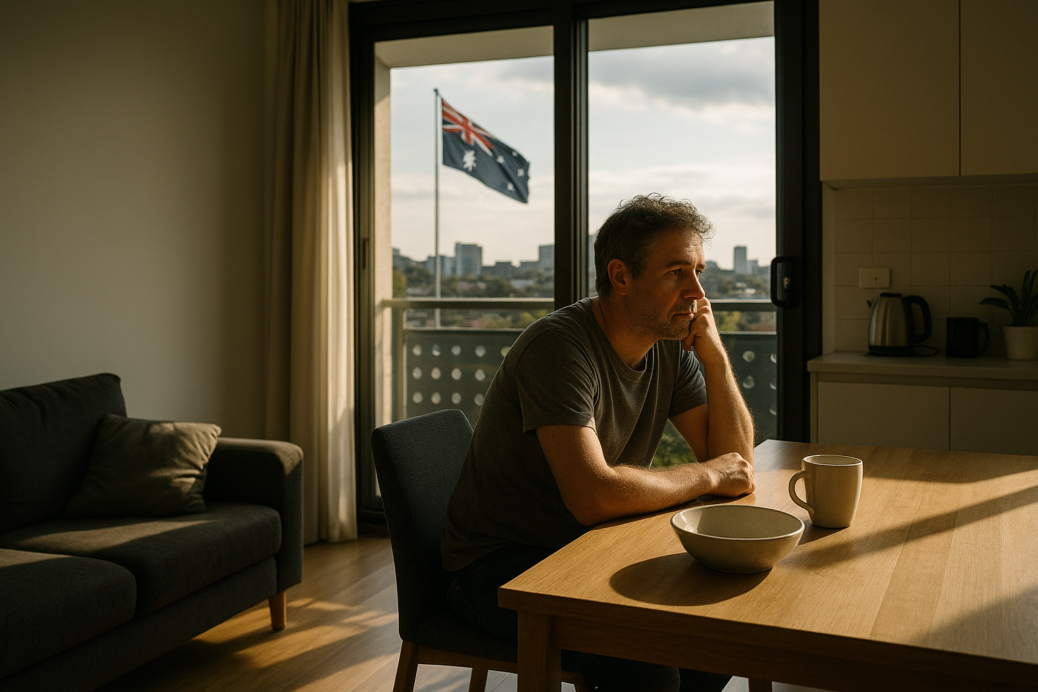
Why More Aussies Are Living Alone And What It Means for the Future
Key takeaways
Single-person households are the fastest-growing household type in Australia.
This isn’t a short-term shift but a long-term demographic trend reshaping the housing market, economy, and community design.
Smaller households increase housing demand, not reduce it, because one person needs almost as much infrastructure as a family.
Supply is mismatched: we keep building large family homes on the fringe while demand is growing for smaller, well-located dwellings.
One of the biggest shifts quietly reshaping Australia is the rise of people living alone.
While our headlines are dominated by talk of housing shortages, migration, and interest rates, the reality is that who lives in those homes, and how, is just as important as how many homes we need.
Today, single-person households are the fastest-growing household type in the country.
And this isn’t just a temporary blip; it’s a deep demographic trend that will have ripple effects across the property market, the economy, and even how we build our communities.
For weekly insights subscribe to the Demographics Decoded podcast, where we will continue to explore these trends and their implications in greater detail.
Subscribe now on your favourite Podcast player:
Why living alone is on the rise
Several forces are driving this trend, and together they’re reshaping what a “typical” household looks like.
- We’re living longer lives.
Australians enjoy some of the longest life expectancies in the world.That means more widows and widowers living alone for 10, 20, even 30 years after their partner passes away. What once might have been just a few years in older age has stretched into decades of solo living. - Marriage and children are delayed.
Young Australians are waiting longer to settle down.In decades past, the life cycle was straightforward: leave your parents’ home, get married, start a family.Today, there’s often a 10–15-year gap during which people live on their own, either in shared houses that evolve into solo apartments or directly in single-person dwellings.
As Simon Kuestenmacher puts it in our latest Demographics Decoded podcast:
“It’s not just that more people are living alone; it’s that they’re living alone for longer stretches of their lives. The traditional life cycle of moving from your parents’ house straight into a family home just doesn’t apply anymore.”
- Lifestyle preferences are changing.
Independence, privacy, and personal freedom are valued more highly than ever.Many Australians simply prefer living alone, and that choice is easier now thanks to technology, delivery services, and digital social connections.
The housing market impact
Here’s the paradox: even though our household sizes are shrinking, demand for dwellings actually increases.
A single-person household consumes as much housing stock as a family, sometimes more.
Two singles living apart need two kitchens, two bathrooms, two laundries, and two sets of bills.
This is why smaller households drive more housing demand, not less.
And it’s why we’re seeing a structural undersupply in certain types of dwellings.
The biggest areas of demand will be:
- Compact apartments and townhouses in desirable, walkable locations.
- Downsizer-friendly homes for older Australians who want less maintenance but still need space for family visits.
- Well-designed studios and one-bedroom apartments that aren’t just “cheap entry-level” stock, but genuinely liveable, high-quality homes.
The suburban four-bedroom home still has its place, of course, but it no longer fits the fastest-growing demographic.
Simon highlights the structural mismatch:
“We keep building family-sized homes on the urban fringe, but demand is increasingly for smaller, more central dwellings. If we don’t realign supply with reality, affordability and accessibility will only worsen.”
Social and economic implications
Living alone isn’t only a housing story, it’s also a social one.
As more people spend extended periods of their lives without a partner or housemates, the risks of loneliness and social isolation increase.
This has knock-on effects for health, well-being, and even productivity.
Neighbourhood design will matter more than ever.
We’ll need communities that strike a balance between privacy and opportunities for connection; think mixed-use precincts with cafés, libraries, gyms, and green spaces that encourage people to leave their homes and engage with others.
Technology will help, but it can’t fully replace human interaction.
Governments, developers, and investors all need to think not just in terms of “roofs over heads” but also about fostering livable, supportive, connected communities.
What it means for property investors
For investors who understand how demographics drives our housing markets this is an opportunity.
The challenge is that many of our existing dwellings don’t fit future demand.
The opportunity lies in anticipating what tomorrow’s buyers and renters actually want.
The key characteristics of in-demand properties will include:
- Smaller, efficient homes with clever design to maximise comfort for one or two people.
- Locations that prioritise lifestyle: proximity to cafés, shops, healthcare, and public transport.
- Properties suitable for ageing in place, particularly those that appeal to downsizers who want to stay in their local area.
- Quality over quantity: one-bedroom apartments that are well-designed and in the right location will outperform cookie-cutter high-rise stock.
The future property winners will be those who match these lifestyle shifts, not just the raw numbers of population growth.
The bigger picture
Australia is still in the midst of strong population growth, but demographics aren’t just about how many people we have; they’re about how those people live.
And as more Australians live alone, the property market will need to evolve.
To me, the bottom line is this: investors who understand these shifts will be better positioned to own the kinds of properties that remain in demand, no matter how our lifestyles change.
As Simon Kuestenmacher wisely said:
“The rise of single-person households isn’t a problem, but it is a challenge. It requires us to rethink how we design housing, cities, and services to ensure these Australians live well, not just alone.”
Australia’s property market has always adapted to change, from the post-war boom to the rise of dual-income households and the apartment surge of recent decades.
The rise of solo living is the next frontier. And those who anticipate it will be the ones who thrive.
If you found this discussion helpful, don’t forget to subscribe to our podcast and share it with others who might benefit.
Subscribe now on your favourite Podcast player: